

European excellence in Orbitronics research and training
ORBIS aims to create a European network of experts providing challenging, state-of-the-art training to sixteen doctoral candidates in the field of fundamental and applied Orbitronics.
What is ORBIS?
ORBIS is a EU-funded MSCA Doctoral Network bringing together academic and industrial partners across seven European countries to provide challenging, state-of-the-art training to sixteen doctoral candidates in the field of fundamental and applied Orbitronics.
What it offers

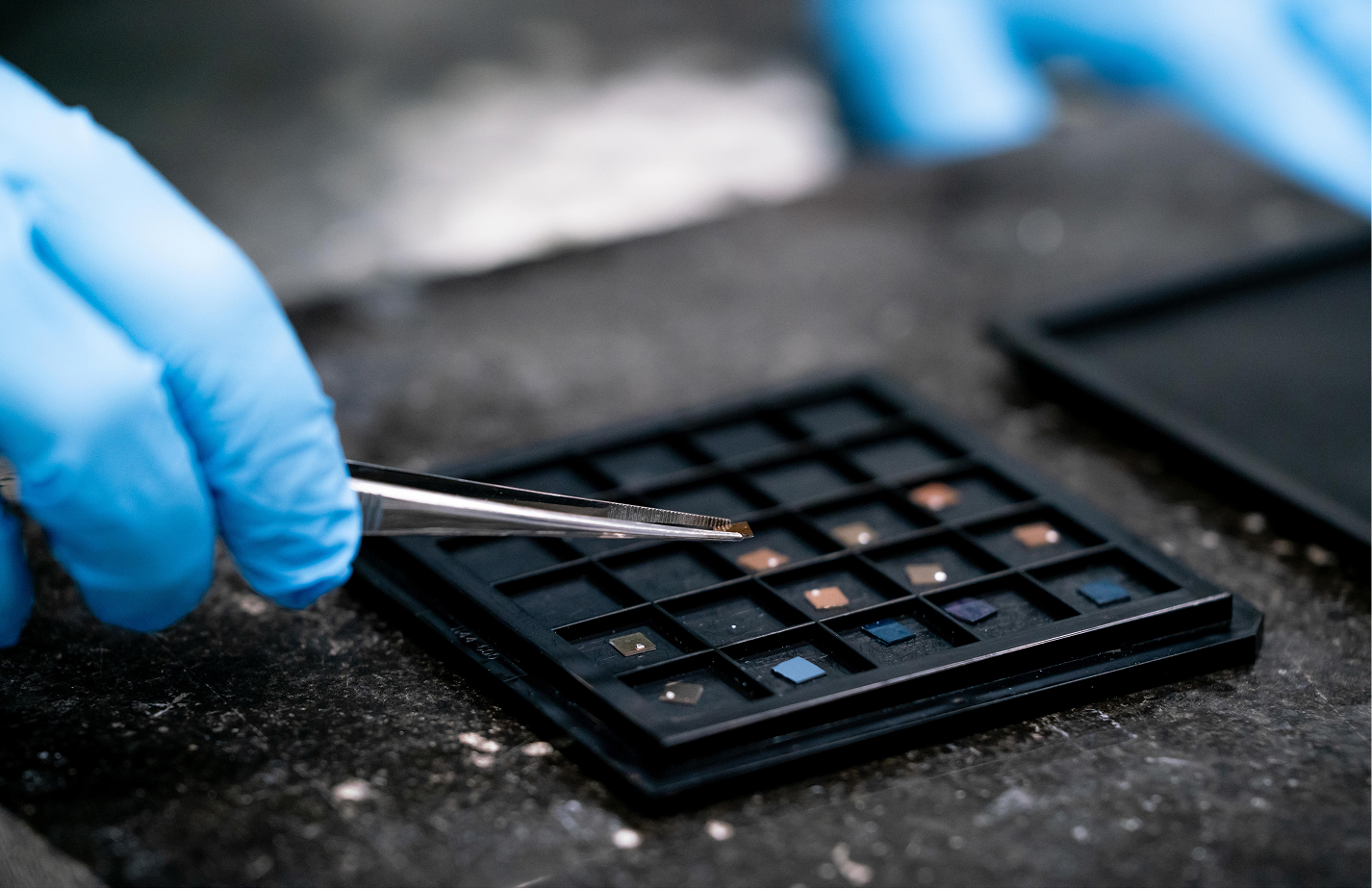
Choice of 16 PhD positions in 7 European countries

Cutting-edge research in Orbitronics

Training in transferable skills

Exposure to industry and academia through secondments

Strong network of scientific and technological expertise

Competitive salary
© Andrea Grützner
Researchers
DC1

IRP1 Optimization of orbit-to-charge conversion for magnetic readout in logic devices
CIC nanoGUNE, Spain
DC2

IRP2 Toward terahertz orbital pumping in ferromagnet/non-magnet stacks
Freie Universität Berlin, Germany
DC3
IRP3 Timescales of Orbital/charge interconversion in Rashba systems
CEA-IRAMIS, France
DC4

IRP4 Electrical and current-gradient control of the orbital torque with light elements
CNRS-Laboratoire Albert Fert, France
DC5

IRP5 Ferroelectric control of orbital transport
CNRS-CINaM, France
DC6

IRP6 Angular momentum generation, conversion and transport in 2D heterostructures
Johannes Gutenberg Universität Mainz, Germany
DC7

IRP7 Orbital currents for spin excitations and exchange interactions
Johannes Gutenberg Universität Mainz, Germany
DC8

IRP8 Orbitronics in van der Waals heterostructures
Rijksuniversiteit Groningen, Netherlands
DC9

IRP9 Spin- and orbitronics in chiral materials
Rijksuniversiteit Groningen, Netherlands
DC10

IRP10 Microscopic origin and optimization of the orbital Hall effect
Martin Luther Universität Halle-Wittenberg, Germany
DC11

IRP11 Exploring the impact of disorder on the orbital Hall and orbital Edelstein effects in 2D materials
International Iberian Nanotechnology Laboratory, Portugal
DC12

IRP12 Theory for detection of induced spin and orbital densities
Uppsala Universitet, Sweden
DC13

IRP13 Orbital torque and pumping for GHz and THz magnonic devices
THALES, France
DC14

IRP14 Ferroelectric control of orbital currents
NELLOW, France
DC15

IRP15 User friendly graphical user interface for multiscale transport approach
SIMUNE, Spain
DC16

IRP16 Enhancing the efficiency of orbital-to-spin conversion for spin-orbit torque devices
ETH Zürich, Switzerland
Become an ORBIS doctoral candidate
Are you interested in joining a European research network at the forefront of Orbitronics?
ORBIS
Orbital-Based Electronics
Project start date
1 February 2026
Project end date
31 January 2030
Funding scheme
Marie Skłodowska-Curie Actions - Doctoral Network (MSCA-DN)
Grant agreement ID
101226840
EU contribution
4.513.458,24 €
Coordinated by