
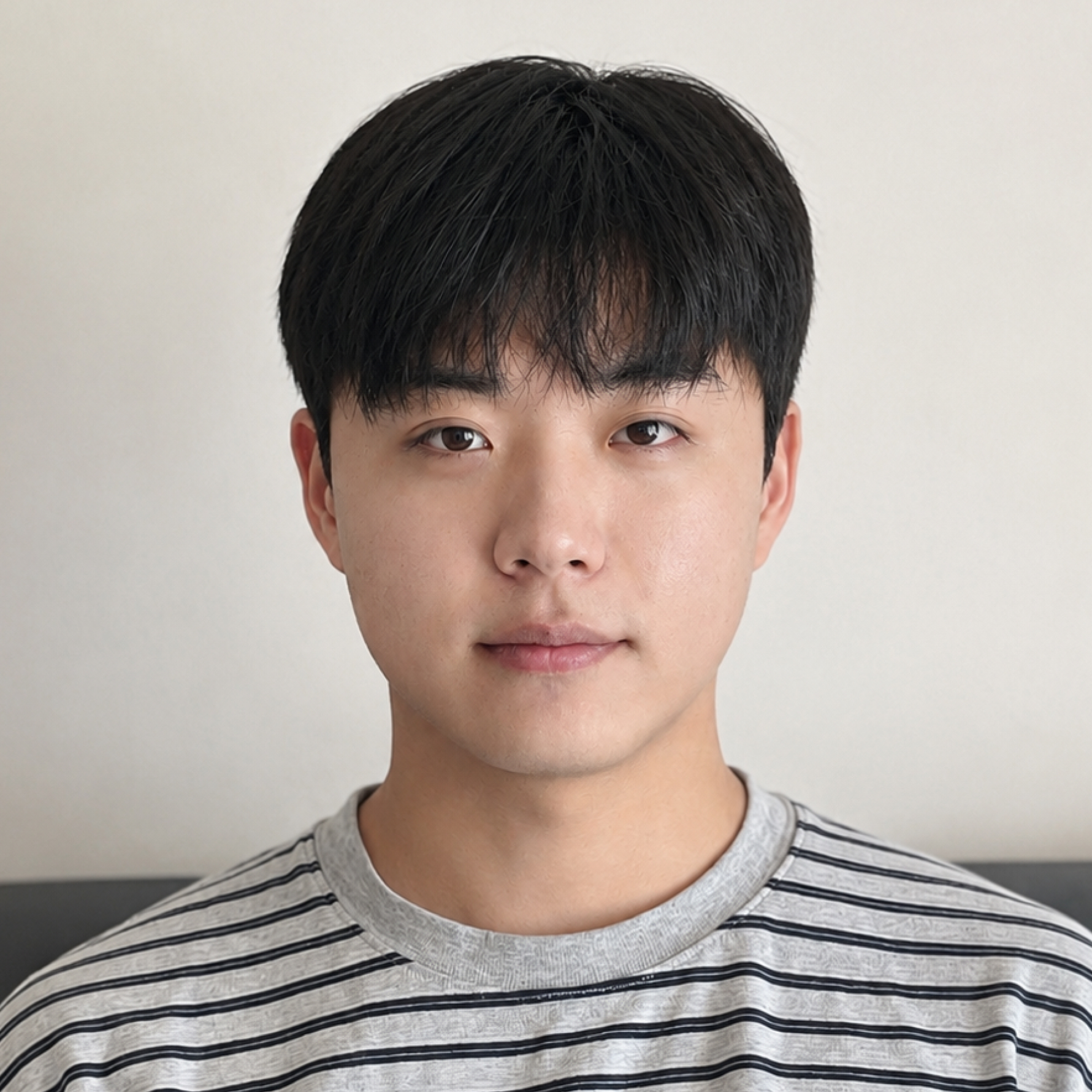
Dongyoung Han
Research project
Angular momentum generation, conversion and transport in 2D heterostructures
Project supervisor
Prof. Mathias Kläui
Recruitment date
01/09/2026
My name is Dongyoung Han, and I am from Rep. of Korea (South). I completed both my bachelor's and master's degrees at Kongju National University.
During my studies, I first worked on magnetic materials, and later became especially interested in spintronics. So during my master's research, I studied how breaking symmetry in device design can influence various magnetoresistance effects and spin-orbit torque.
My interest in orbitronics started when I came across studies suggesting that the orbital degree of freedom may play an important role in quantities such as spin(orbital) torque efficiency and spin(orbital) Hall angle in various heterostructures. This idea strongly attracted me because it suggests that orbital currents could become an important building block for designing more efficient spintronic devices. This was one of the main reasons I decided to pursue a PhD in this field, and why I felt that the ORBIS was the right place for me.
Through ORBIS, I hope to get an answer whether heterostructures based on emerging materials, such as two-dimensional materials, can really generate highly efficient orbital current, and how these can be effectively utilized. Also, I am looking forward to learning new concepts, improving my experimental skills, and working within an international network where different perspectives can meet. In the future, I hope to contribute to establishing spin-orbitronic devices as a robust platform for future electronics.
Project Description
Manipulation of magnetization by spin currents has been established as a scalable and efficient means for device applications. E.g. magnetic random access memory and magnetic sensors exploit the spin currents. However, for spin angular momentum the generation efficiency is limited by the small relativistic spin orbit coupling effects.
In this project we want to exploit angular momentum currents (OAM). In particular, in 2D materials, the generation of OAM is potentially much more efficient than that of spin angular momentum due to the geometrical confinement. Novel effects, such as an orbital Hall insulator state, have been predicted in 2d materials. These are not only of fundamental interest but can also be sources of robust orbital currents.
For transition metal- and rare earth-dichalcogenides [(Eu, Gd, etc.)(S, Se, Te)2] we will explore orbital-charge interconversion. Focus will be put on the issue of reciprocity of the charge-to-orbital and orbital-to-charge conversion, which can be violated. We will study the transport of OAM in these materials and explore the functionality of gate-tuneable transport. We expect that one can thus switch the transport on and off to make a transistor-type device. Finally, as the switching efficiency scales with 1/thickness of the magnetic material, heterostructures with 2D magnets are expected to exhibit ultimately efficient switching.
The research will require the exfoliation and stacking of 2D materials into van der Waals heterostructures, the nanofabrication of devices (thin film deposition, electron beam lithography, etching), and magnetotransport measurements (high magnetic fields and low temperatures).
Host institution

Johannes Gutenberg-Universität Mainz (JGU) is a public research university. The Department of Physics of JGU is one of the largest and most highly ranked departments (top 5-10 in Germany, top 50-100 in recent rankings globally).
Kläui Lab is an experimental research group led by Prof. Mathias Kläui that focuses on the properties of nanoscale magnetic elements and their switching by various approaches, including topological spin structures. It consists of 4 permanent staff scientists, 10 post-doctoral researchers, 20 doctoral candidates, and 12 Master’s and Bachelor students.
Planned Secondments
Academic Secondment
Rijksuniversiteit Groningen (RUG)
Groningen, Netherlands
Prof. Jagoda Sławińska | Prof. Marcos Guimarães

Industrial Secondment
Graphenea Semiconductor (GS)
Donostia / San Sebastián, Spain
Dr. Amaia Zurutuza
Registering University
Johannes Gutenberg Universität Mainz
Germany