
News Kudeep Ray defends!
16 February 2026
Aurélien Manchon
Kudeep Ray defends!
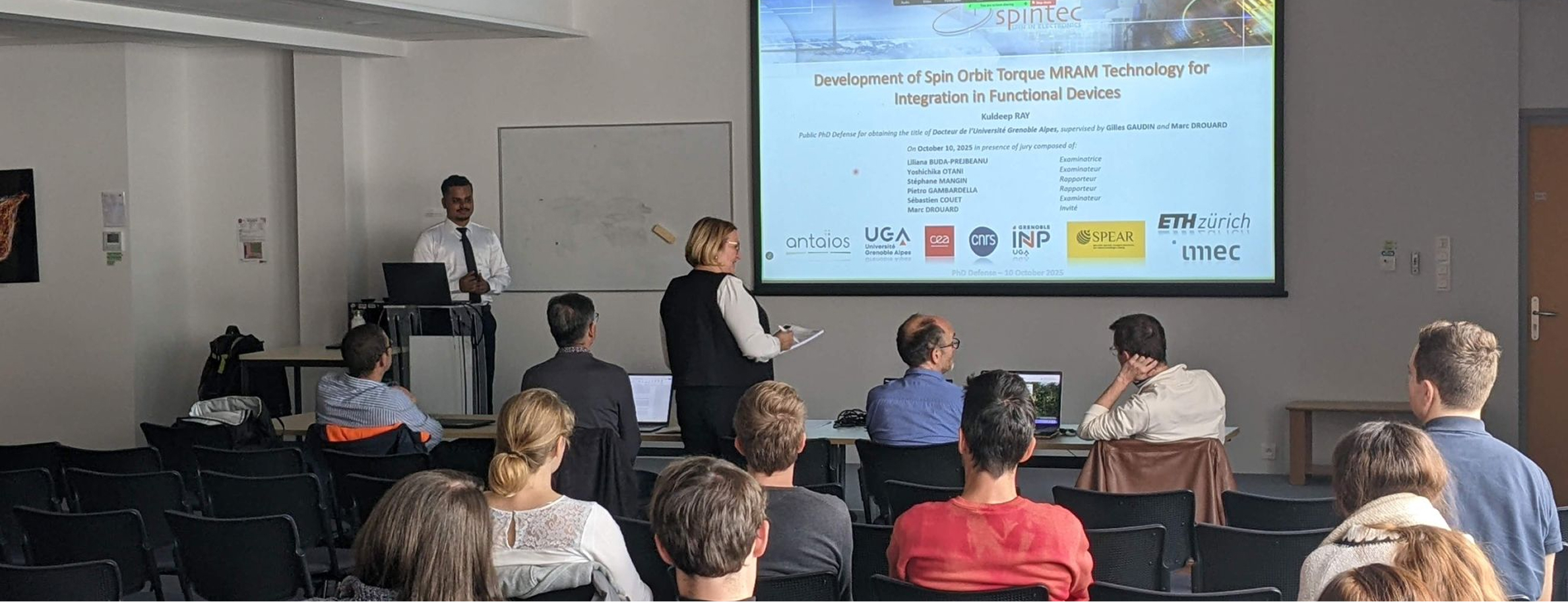
After a journey full of vicissitudes, last Friday Kuldeep (ESR14/16) defended his thesis on SOT-MRAM! He is SPEAR’s sixth ESR to defend! Congrats Dr. Ray!!
I then did a joint master’s in chemistry and materials engineering, in Paris and Genoa respectively as part of the Erasmus Mundus programme, with my thesis being on nanomagnetic phenomena in iron oxide nanoparticles. My main academic interest is in solid state physics, particularly magnetic phenomena, but I’ve also done some projects on computational catalysis, and atmospheric chemistry.
When I was looking at PhDs it was important for me that it be a project that was technologically relevant, and ideally in the field of computing hardware, since having spent a lot of time learning about CMOS technology, I was very aware of the upcoming roadblocks in improving current technology, and overcoming these challenges would be an amazing field to work in. Their focus on this area, combined with the network of hugely innovative companies represented in the SPEAR group made it seem like the perfect place to be – the hardest part was choosing which project to apply to.
I’m really looking forward to meeting everyone on the team and getting to start working on the project. I’m also very excited about living in a new city and learning a new language, or maybe two, trying the local food, and spending some time on the beach. After my PhD I’m hoping to pursue a research career in spintronics in an industrial setting, and I hope the skills I learn and people I meet during the project will be really helpful for that.
Project Description
The magneto-electric spin-orbit (MESO) logic is a scalable and revolutionary alternative to CMOS proposed by Intel, with superior energy efficiency, high logic density, non-volatility and efficient interconnects [1]. It relies on phenomena that exploit spin-orbit coupling, such as the spin Hall effect and the Rashba-Edelstein effect, to generate large spin-to-charge current conversion.
The objective of this project is to explore novel materials beyond the conventional strong spin-orbit coupling heavy metals to maximize the output voltage using all-electrical local T-shaped devices, developed in our group as one of the MESO logic elements [2]. The successful candidate will explore graphene-based hybrid materials, while benchmarking them for future MESO devices. These heterostructures will combine the long spin diffusion length and large sheet resistance of graphene with another material that will induce spin-orbit coupling by proximity, such as semiconducting transition metal dichalcogenides [3], heavy metal oxides [4], or Weyl semimetals [5].
The research will require the exfoliation and stacking of 2D materials into van der Waals heterostructures, the nanofabrication of devices (thin film deposition, electron beam lithography, etching), and magnetotransport measurements (high magnetic fields and low temperatures).
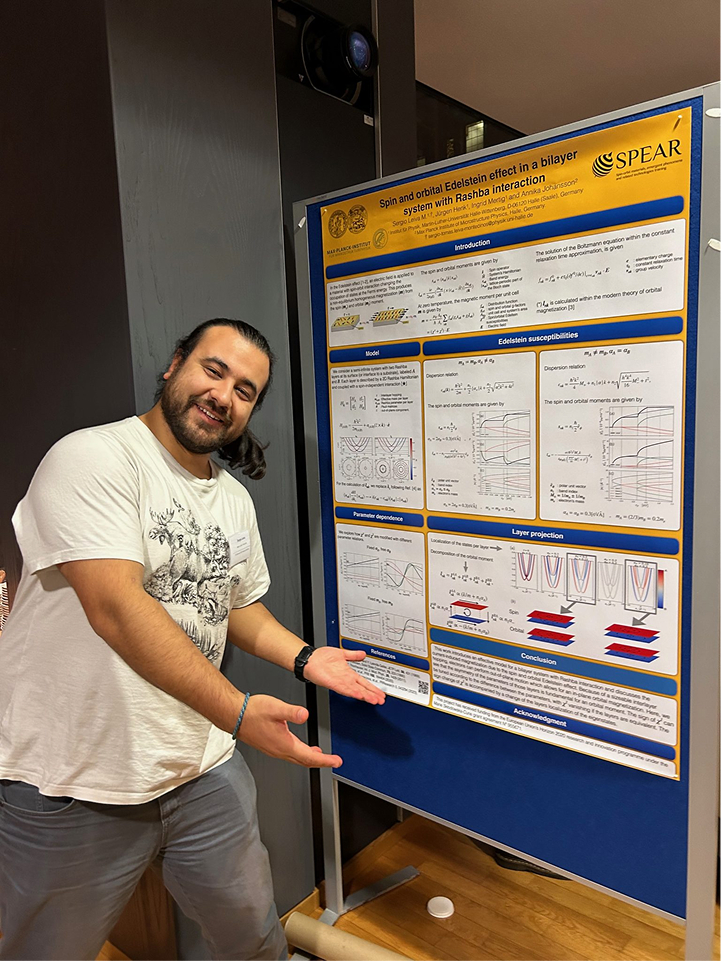
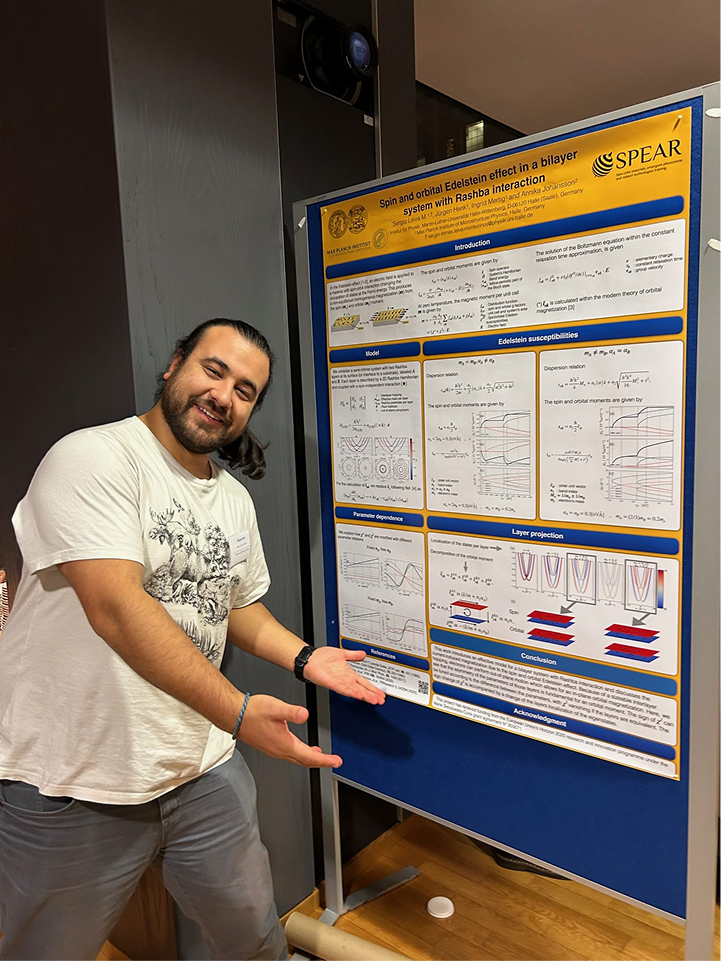
The magneto-electric spin-orbit (MESO) logic is a scalable and revolutionary alternative to CMOS proposed by Intel, with superior energy efficiency, high logic density, non-volatility and efficient interconnects [1].
Project Description
The magneto-electric spin-orbit (MESO) logic is a scalable and revolutionary alternative to CMOS proposed by Intel, with superior energy efficiency, high logic density, non-volatility and efficient interconnects [1]. It relies on phenomena that exploit spin-orbit coupling, such as the spin Hall effect and the Rashba-Edelstein effect, to generate large spin-to-charge current conversion.




- Logic is a scalable and revolutionary alternative to CMOS
- Proposed by Intel, with superior energy efficiency
- High logic density, non-volatility and efficient interconnects [1]